エッセイ Vol.17 ピーター ・J・ マクミラン
私は「和え物」
2026年7月1日
私が好きになった日本語の言葉に「和える」がある。これは料理の用語だが、その背後には日本文化の美しい思想が息づいている。
英語では “mix” と一語で表されるところを、日本語には「混ぜる」と「和える」という二つの表現がある。「混ぜる」がコーヒーにミルクを入れて混ぜたり、粉と水を混ぜたりと、素材を一体化させるのに対し、「和える」は素材それぞれの個性を保ちながら、新たな味わいを生み出す過程である。例えばほうれん草の胡麻和えや、豆腐と野菜を和えた白和えのように、異なる素材が互いを引き立てながら、1+1=2以上の豊かな味わいを生み出す。「和える」の漢字が「和」と同じであることも、私にとっては意義深い。「和える」とは器の中に調和を生み出すことなのだ。
英語では “mix” と一語で表されるところを、日本語には「混ぜる」と「和える」という二つの表現がある。「混ぜる」がコーヒーにミルクを入れて混ぜたり、粉と水を混ぜたりと、素材を一体化させるのに対し、「和える」は素材それぞれの個性を保ちながら、新たな味わいを生み出す過程である。例えばほうれん草の胡麻和えや、豆腐と野菜を和えた白和えのように、異なる素材が互いを引き立てながら、1+1=2以上の豊かな味わいを生み出す。「和える」の漢字が「和」と同じであることも、私にとっては意義深い。「和える」とは器の中に調和を生み出すことなのだ。
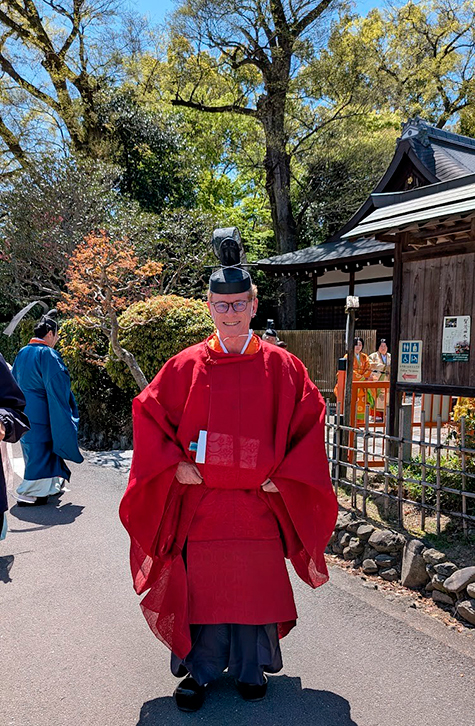
2026 上賀茂神社の曲水の宴にて
今、私は「和」についての本を執筆中であるが、この言葉はその中心的な考えを表している。多くの文化では、調和とは合意すること、角を丸くすること、違いを平準化することと捉えられている。でも「和える」は違う。真の調和とは違いを消して同化することではなく、お互いを拒否することなく、違いを認めながら、補い合うことではないだろうか。
また、せっかちになっては調和は生まれない。「和える」には「馴染む」という大切な過程が伴う。時間をかけて料理を寝かせることで味が馴染み、新しい靴が足に馴染み、新しく来た人が共同体に馴染んでいく。今の時代、ゆっくりは嫌われ、待つことは時間の無駄だと捉えられがちだ。でも、調和には時間と忍耐が必要である。
私は「和える」を単なる料理の言葉ではなく、人と人との結びつきを示す哲学として捉えるようになった。それぞれの人の持つ個性を見つめ、他者と自分、どちらも尊重することで、調和は自然と生まれてくる。
長年日本で暮らしてきた私自身も、アイルランド人としてのアイデンティティを失うことなく、日本文化と共に生きてきた。私は「混ぜられた」のではなく、「和えられた」のである。二つの文化はそれぞれの風味を保ちながら私の中に存在し、お互いを豊かにし合っている。私はついに「和え物」となったことに幸せを感じている。
また、せっかちになっては調和は生まれない。「和える」には「馴染む」という大切な過程が伴う。時間をかけて料理を寝かせることで味が馴染み、新しい靴が足に馴染み、新しく来た人が共同体に馴染んでいく。今の時代、ゆっくりは嫌われ、待つことは時間の無駄だと捉えられがちだ。でも、調和には時間と忍耐が必要である。
私は「和える」を単なる料理の言葉ではなく、人と人との結びつきを示す哲学として捉えるようになった。それぞれの人の持つ個性を見つめ、他者と自分、どちらも尊重することで、調和は自然と生まれてくる。
長年日本で暮らしてきた私自身も、アイルランド人としてのアイデンティティを失うことなく、日本文化と共に生きてきた。私は「混ぜられた」のではなく、「和えられた」のである。二つの文化はそれぞれの風味を保ちながら私の中に存在し、お互いを豊かにし合っている。私はついに「和え物」となったことに幸せを感じている。
I am an "Aemono"
There is a Japanese word I have come to love— "aeru" .On the surface it is humble—a cooking term, a verb meaning to dress or toss vegetables with a seasoning. A Japanese cook uses it without a second thought. Yet beneath that modest surface lies, I believe, one of the most beautiful ideas in the language, and one that has quietly come to shape how I understand my own life.
English gives us only one word, “to mix,” where Japanese gives two. To mix is to combine until distinction disappears—milk poured into coffee, flour stirred into water. "Aeru" is something else entirely. When spinach is dressed with sesame, or tofu folded gently with vegetables, the ingredients are not blended into sameness. Each keeps its own character—the green snap of the bean, the nuttiness of the sesame, the faint sweetness of sugar—and yet together they become something new, something richer than any could be alone. It is no accident that "aeru " is written with the very character for "wa," harmony. To "aeru" is to enact harmony in the bowl.
This is why the word matters to me so much, and why it sits at the heart of the book on "wa" I am now writing. Most cultures imagine unity as agreement, as the smoothing away of edges, the levelling of difference. "Aeru" imagines unity differently. It holds that the truest togetherness comes not from erasing what makes each thing distinct, but from arranging differences so that they complement rather than cancel one another. Harmony, in this view, is not the absence of difference but its artful arrangement.
And it cannot be hurried. "Aeru" has a companion, "najimu" —to settle, to grow accustomed, until the sense of strangeness quietly disappears. Flavors "najimu" as they rest together; a new pair of shoes "najimu" to the foot; a newcomer "najimu" to a community, and the community to them. We live in an age that distrusts slowness and calls waiting waste. But "najimu" knows that certain unities simply require time, the patient passage through which friction dissolves.
I have come to think that "aeru "is far more than a culinary verb. It is a quiet philosophy of how people, not only ingredients, might best be brought together: with attention to what each one brings, with respect for the other and for oneself, and with the patience to let coherence emerge rather than be imposed. To "aeru" well is an act of attention before it is an act of combination.
This, perhaps, is why I love it. Having lived so many years in Japan while holding fast to my Irish roots, I have not been mixed—dissolved into something I am not. I have been "aeru"-ed. My two cultures sit together in me, each keeping its flavor, each enriched by the other. I am, I have happily concluded, an "aemono" .
There is a Japanese word I have come to love— "aeru" .On the surface it is humble—a cooking term, a verb meaning to dress or toss vegetables with a seasoning. A Japanese cook uses it without a second thought. Yet beneath that modest surface lies, I believe, one of the most beautiful ideas in the language, and one that has quietly come to shape how I understand my own life.
English gives us only one word, “to mix,” where Japanese gives two. To mix is to combine until distinction disappears—milk poured into coffee, flour stirred into water. "Aeru" is something else entirely. When spinach is dressed with sesame, or tofu folded gently with vegetables, the ingredients are not blended into sameness. Each keeps its own character—the green snap of the bean, the nuttiness of the sesame, the faint sweetness of sugar—and yet together they become something new, something richer than any could be alone. It is no accident that "aeru " is written with the very character for "wa," harmony. To "aeru" is to enact harmony in the bowl.
This is why the word matters to me so much, and why it sits at the heart of the book on "wa" I am now writing. Most cultures imagine unity as agreement, as the smoothing away of edges, the levelling of difference. "Aeru" imagines unity differently. It holds that the truest togetherness comes not from erasing what makes each thing distinct, but from arranging differences so that they complement rather than cancel one another. Harmony, in this view, is not the absence of difference but its artful arrangement.
And it cannot be hurried. "Aeru" has a companion, "najimu" —to settle, to grow accustomed, until the sense of strangeness quietly disappears. Flavors "najimu" as they rest together; a new pair of shoes "najimu" to the foot; a newcomer "najimu" to a community, and the community to them. We live in an age that distrusts slowness and calls waiting waste. But "najimu" knows that certain unities simply require time, the patient passage through which friction dissolves.
I have come to think that "aeru "is far more than a culinary verb. It is a quiet philosophy of how people, not only ingredients, might best be brought together: with attention to what each one brings, with respect for the other and for oneself, and with the patience to let coherence emerge rather than be imposed. To "aeru" well is an act of attention before it is an act of combination.
This, perhaps, is why I love it. Having lived so many years in Japan while holding fast to my Irish roots, I have not been mixed—dissolved into something I am not. I have been "aeru"-ed. My two cultures sit together in me, each keeping its flavor, each enriched by the other. I am, I have happily concluded, an "aemono" .

職位:客員教授
■所属学会・委員会
Pen America 日本ペンクラブ会員
一般財団日本文化交流基金(Japan Cultural Institute)代表理事
和歌文学会 会員
■所属学会・委員会
Pen America 日本ペンクラブ会員
一般財団日本文化交流基金(Japan Cultural Institute)代表理事
和歌文学会 会員